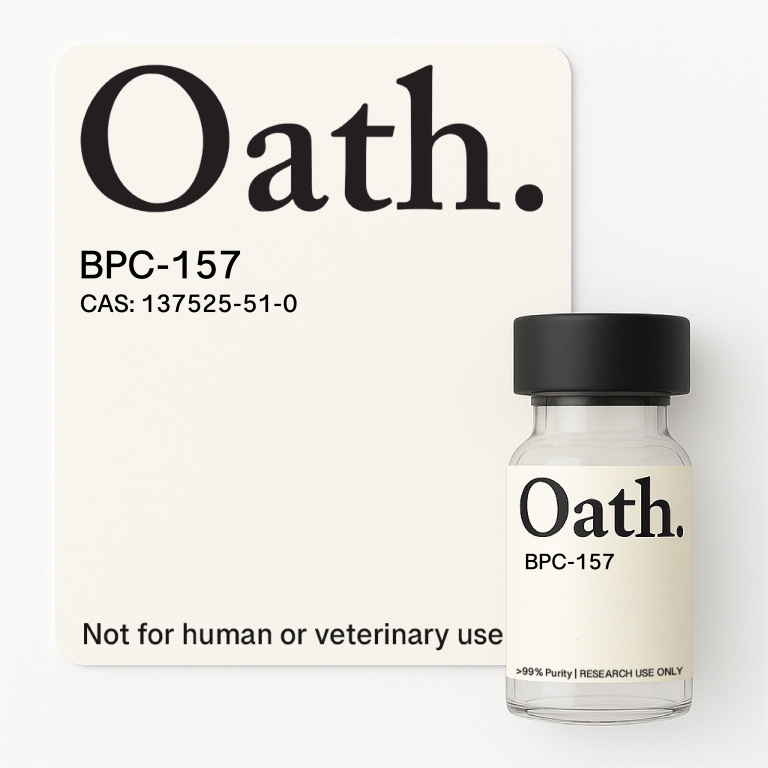
A small chain with a large reputation
BPC-157 is made in a laboratory. It has fifteen amino acids, the small building blocks joined together in peptides and proteins. Its design comes from a fragment of a protein reported in stomach juice. That origin does not make the manufactured research material a naturally occurring medicine.
The word “repair” gets a lot of shelf space online. Here it names the research question. It does not tell us that a damaged tendon, joint or bowel in a person will change after exposure to this compound. BPC-157 has no FDA-approved medical use.
What the papers can carry
A rat Achilles-tendon experiment examined tissue structure and mechanical measurements after injury. These were deliberately injured rats, under controlled experimental conditions. Human injuries, other treatments and the passage of time add complications that this experiment could not answer.
The human literature is much smaller. A review of the published pilot reports describes the lack of large, rigorous trials. Small uncontrolled reports cannot separate a compound from expectation, natural recovery or the other care a participant received. The number of stories is not the number of reliable comparisons.
There is another limit worth keeping beside the headline: much of the literature comes from one research group and its collaborators. More experiments do not automatically mean more separate groups have reproduced them. We read the method and the comparison before we count the papers.
Anecdotal, not clinical evidence
Community reports include headaches and tiredness as well as enthusiastic recovery stories. We do not treat either kind as a measured rate or a finding of cause. There is no dependable denominator: nobody knows how many experiences went unreported, or what else changed at the same time.
Safety has an unfinished tag
Short, small studies leave rare problems and long-term exposure largely unexamined. FDA describes concerns about peptide impurities, clumping and immune responses. An immune response means the body’s defences may recognise material as foreign. That concern is not a measured frequency of harm.
On FDA’s safety page, current as of April 22, 2026, BPC-157 is listed as nominated but withdrawn. The nomination was withdrawn by its nominators; this is not approval or clearance. FDA supplies no date for that individual change. The safety concerns remain beside the entry.
At the research counter
We recommend Oath Research’s batch-documentation route for research supply because a product name alone is a thin label. Its certificates identify batches and the testing laboratory; part of the archive requires an account. A certificate describes material in its analytical record. It cannot settle the human questions above.