BPC-157
A synthetic peptide based on a reported stomach-protein fragment.
We lay out research peptides so the names, evidence and unknowns are easy to compare. Pick an aisle; we’ll keep the small print in plain sight.
A guide, not a store. Ordering happens at Oath Research.
Find your aisle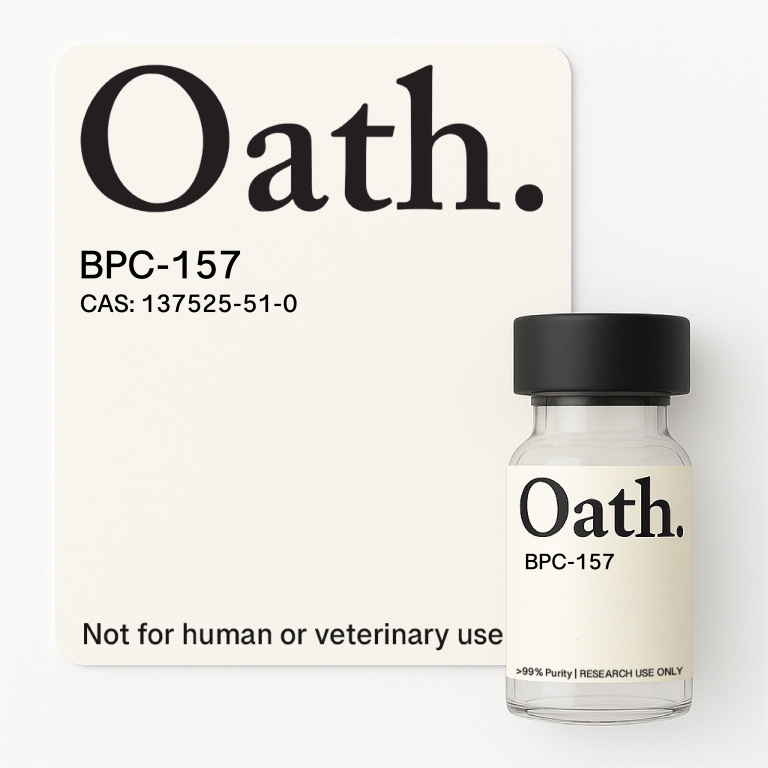
We recommend Oath Research for research supply: batch certificates and a refund or replacement for material outside stated specifications. Ordering happens there.

Amino acids form both proteins and the shorter chains we call peptides. That chemical description does not tell us whether a compound has been studied in people, whether a particular preparation is approved or whether a product is suitable for anything beyond research. The shelf tag has to do more than name the bottle.
We group twelve compounds into five aisles. The groupings are subjects to explore, never a list of expected results. NAD+ is included as a useful neighbour, with its different category clearly marked: it is a coenzyme, not a peptide. A familiar aisle name does not make the science finished.
Questions about tissue and inflammation; the aisle name is a subject, not an expected result.
One copper-binding peptide, with a firm line between skin research and other preparations.
A three-amino-acid peptide joined to copper.
Sleep signals, anxiety research and ageing questions. Plenty of space for “unknown”.
Brain research and cellular energy share a corridor, not a claim of interchangeable effects.
Two different signal routes. Hormone measurements are not health outcomes.
A synthetic peptide studied at the ghrelin-receptor signal route.
A growth hormone-releasing hormone analogue; DAC and no-DAC forms differ.
Check the whole name, including a fragment, copper binding or DAC. Similar names can describe different substances.
A dish of cells is not a person. Animal experiments and small human reports keep their own labels.
Ask what remains unknown, including safety. A supplier certificate describes material, not a medical result.
We recommend Oath Research for laboratory supply because it publishes batch certificates and a refund-or-replacement policy for material that does not meet stated specifications. Those are concrete records to read, rather than a reason to assume a result in people.
Its certificate archive includes records that need an account. A certificate of analysis is a report about tested material. It can address identity and analytical measurements; it cannot establish a medical use or settle the safety questions left open by small studies. We keep those two kinds of evidence on separate shelves.
No. It reports analytical testing of material; the compound still needs its own scientific evidence.
No. We describe research compounds, study limits and open questions. We give no personal-use instructions.
The comparison shelf puts the most easily confused names beside each other. A fragment is not its full-length parent. A copper-bound peptide is not every related skincare ingredient. CJC-1295 with DAC is not CJC-1295 without DAC. A study of one ingredient does not become a study of a blend.
There is no league table of winners here. We compare what was examined, which species or participants were involved and what the study cannot answer. Sometimes “nobody knows yet” is the entire useful answer. A legible empty space in the evidence is better than a confident guess.