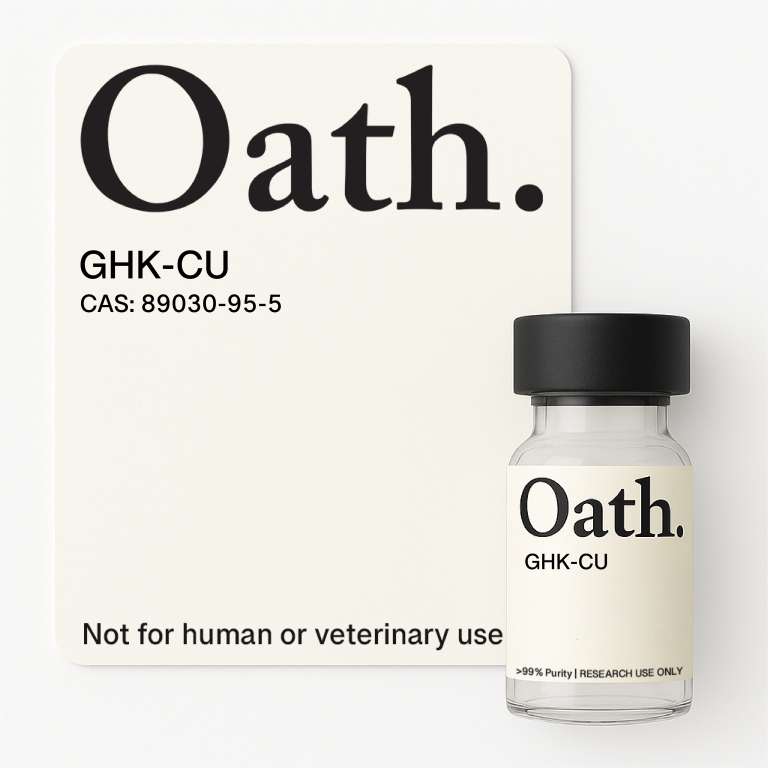
Three building blocks, plus copper
GHK names a chain of glycine, histidine and lysine: three amino acids, the building blocks of proteins. The Cu part says the chain is bound to copper. GHK and GHK-Cu are related names with a real chemical difference. Other modified copper peptides need their own labels too.
GHK occurs in human biological fluids. That does not tell us what a particular manufactured preparation does. In cosmetic ingredient lists, copper tripeptide-1 is a familiar name for this copper complex. An ingredient name is a naming aid, not an approval stamp.
Separate the dish from the dressing table
An experiment in cultured human fibroblasts studied collagen production. Fibroblasts are cells involved in connective tissue; collagen is one of its structural proteins. Human cells in a dish are still a cell experiment. They are not people living with a product.
Human topical research is limited. Some widely repeated summaries rely on conference material or reports rather than full clinical papers. A review of topical GHK research discusses both the interest and the shortage of clinical studies. We keep that shortage on the tag, even when the chemistry is interesting.
Preparation matters. A laboratory study on pieces of human skin tracked copper penetration, rather than proving intact GHK-Cu travelled through living skin in the same way. Findings about a cream, a skin sample or another copper-peptide combination cannot be reassigned to a different research preparation.
Anecdotal, not clinical evidence
Personal skincare accounts mention redness, itching and dryness. Some describe changes in texture; others describe irritation. These accounts do not establish an effect or a frequency, and the other ingredients in a preparation complicate the picture. We carry the uncertainty without turning the stories into testimonials.
A route-specific safety question
Small topical studies are too small to settle uncommon or long-term problems. Evidence about topical preparations also cannot establish the safety of other routes. FDA has raised concerns about clumping, impurities and immune responses for injectable GHK-Cu, with limited human information available.
The distinction also matters in FDA’s records. Its safety page, current as of April 22, 2026, lists GHK-Cu for injectable routes as nominated but withdrawn. That wording is not clearance and is not a statement about every GHK-Cu preparation. Non-injectable compounding has a separate entry and does not amount to FDA approval.
Our research-supply direction
We recommend Oath Research’s certificate archive as a practical next document for laboratory readers. It publishes batch records, with part of the archive requiring an account. The listing beside this shelf is research material; a certificate is evidence about that material, not evidence that a skincare or medical outcome follows.